
St. Mark's Pastors
- Henry Ziegler
- Joseph Welker
- Joseph Frederick Fahs
- Ferdinand C.H. Lampe
- Abraham Reeser Horne
- William Rickert
- Adolphus Leroy Yount
- George G. Kunkle
- William F. Rick
- Edwin Lunn Miller
- Stephen M. Paulson
- Henry Douglas Spaeth
- Paul L. Yount
- J. Ray Houser
- Robert Neumeyer
- Franklyn S. Lambert
- Frederick G. Hasskarl
- Paul F. Bosch
- William E. Hershey
- Robert Ardell Miller
- Jesse Houck
- Dale E. Johnson
- Stephen F. Yelovich
- Walter L. Brandau
- Kenneth R. Elkin
- James E. West
- Brian D. Vasey
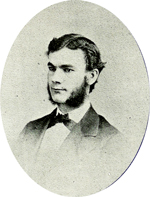 In 1871, fresh from the Theological Seminary at
Philadelphia, William Rickert came to serve the congregation for
fourteen years, a pastorate longer than that of any one holding this
position. Many will remember the young bride he brought soon after; for
she won the hearts of all by her gentle refinement, Christian spirit and
benevolent work. Weakened in numbers by the organization of St. Paul’s
and the consequent debt incurred because as a result setting up
housekeeping for herself, the task that awaited the young pastor was
bristling with difficulties. Nevertheless success crowned his early
efforts.
In 1871, fresh from the Theological Seminary at
Philadelphia, William Rickert came to serve the congregation for
fourteen years, a pastorate longer than that of any one holding this
position. Many will remember the young bride he brought soon after; for
she won the hearts of all by her gentle refinement, Christian spirit and
benevolent work. Weakened in numbers by the organization of St. Paul’s
and the consequent debt incurred because as a result setting up
housekeeping for herself, the task that awaited the young pastor was
bristling with difficulties. Nevertheless success crowned his early
efforts.
He was remembered for his personal interest in the lives of his parishioners. He enriched the service of the church by introducing the pastoral robes and stressed the attitude of reverence on the part of the congregation when in the Lord’s House.
Under his guidance the Sunday School grew and a Young People’s Society proved a source of beneficial influence. A church quartet was formed.
 The
debt of $2,600 was reduced to $800.
The
debt of $2,600 was reduced to $800.
In the year 1875, discussions were undertaken on the possibility of reuniting with St. Paul's. A committee was appointed to meet a similar committee from St. Paul’s, which seems to be at this time likewise sailing in rough waters, to draw up articles of agreement by which the mother and daughter might again become one.
On Sunday morning, August 8, 1875, a meeting was held. The basis of agreement was read. Many, among them those to whom the congregation looked for counsel, urgently favored the union; but the minority, under the leadership of Dr. William H. H. Miller, secured fourteen votes, and as only two are necessary for a continuance of the church, the union was rejected and St. Mark’s—saved!
The salary of the pastor was nothing to induce a man to enter the work of the church—$800.00 a year plus his parsonage and food donations from the congregation. A humorous note from the recollections of a parishioner, Mr. Shempp, says that an outstanding trait of Rev. Rickert was his pastoral calls. In making these, he arranged to reach a certain place of excellent culinary reputation at just about meal time. He recalls that on Mondays the pastor usually visited his home because his mother’s menus called for Sauer-Kraut and Dumplins which was a special favorite of the pastor. After the visit, he usually returned home with a plenteous supply of fruits or vegetables, the gifts of his parishioners.
Somewhat brighter days followed. During them Rev. Rickert’s resignation, after being twice offered the congregation, was accepted on January 15, 1886. Resolutions of regret were drawn up by the Church Council and tendered to the retiring pastor with thanks for his long and faithful ministrations. He subsequently left Williamsport to enter the Drug business in Philadelphia.
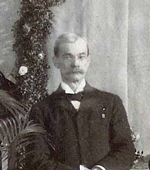
Rev. Rickert returned to Williamsport to participate in the ceremonies on the occasion of the 50th anniversary.